Bio-Armor
Building Strength from Wood By-Products

At the University of British Columbia’s Bio-Materials lab, bio-cellulose can be processed in many forms. By removing lignin from scrap wood and “healing”, this densified regeneration process combined with high pressure molding creates a biological material substantially stronger than steel and more flexible properties if processed with additives, making it less rigid.


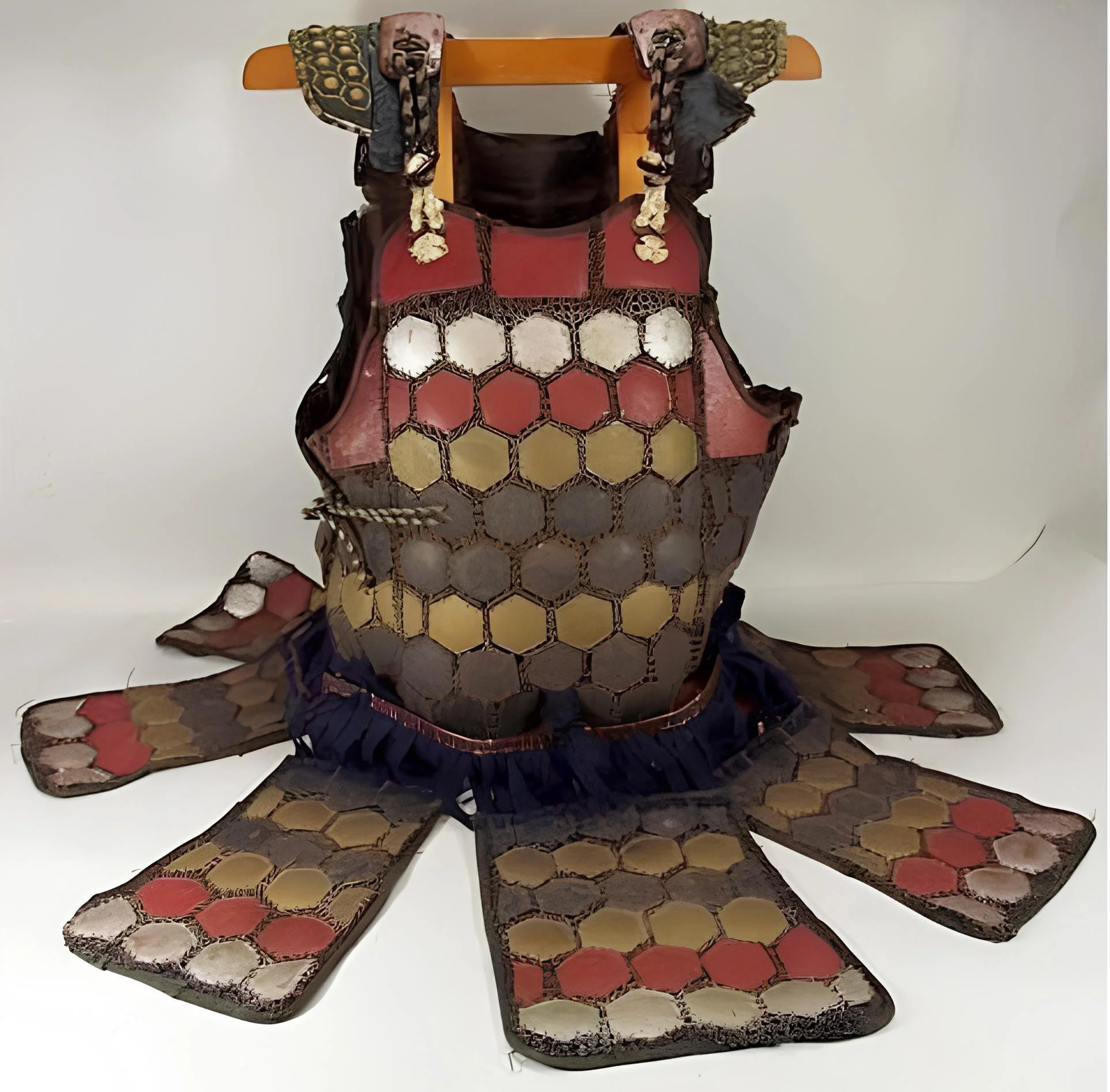
In Japan, Kikko armor was made of a series of hexagonal iron or hardened leather plates sewn into cloth or chainmail for Samurai warriors. This technique provided a lightweight and flexible option for defense with a good balance between protection and agility. Using resin, I created a proxy material which had both hard and durable properties on the outer-layer and a flexible layer on the backing which gave it good range of motion and strength.




After finding the best mixtures of resin to create my prototype, I began to research the bodily form best suited for protection that provides a good range of motion for the user. Drawing in Illustrator allowed quick ideation and accurate sketches to be created for a final design.
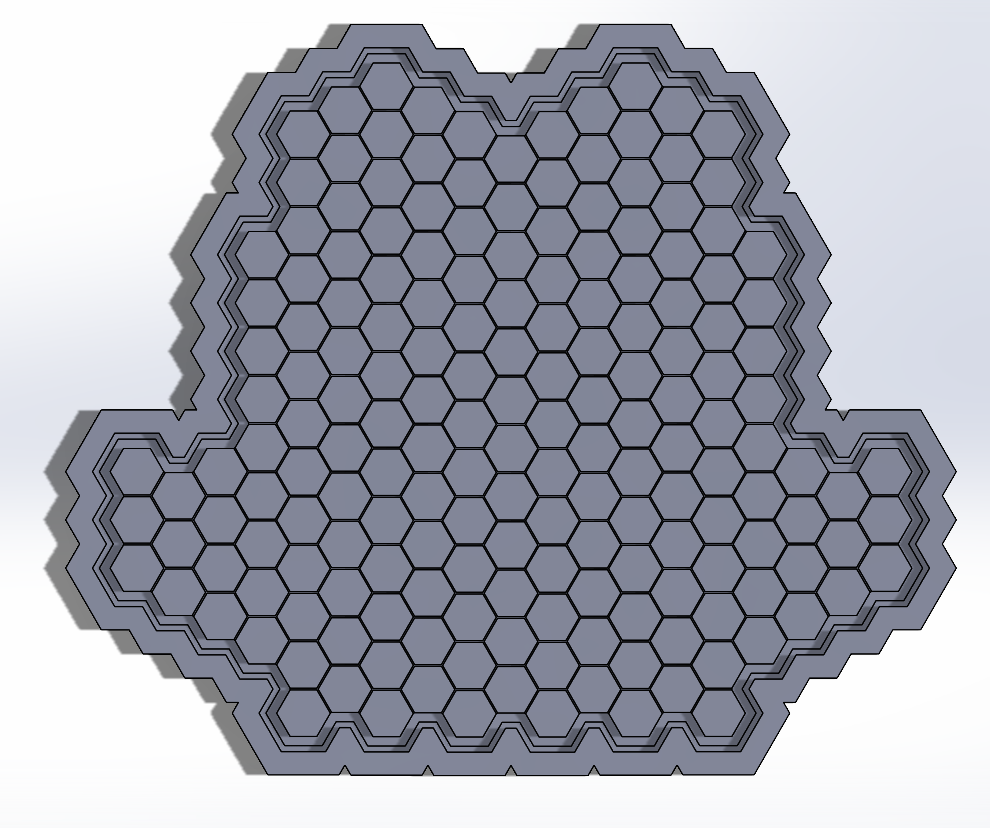

To build a full-size prototype, a 1:1 scale mold was made. First designed in SolidWorks as a 3D model then using CNC to make a positive with wood, I was able to create a silicone negative mold with silicone to work with the layers of resin.
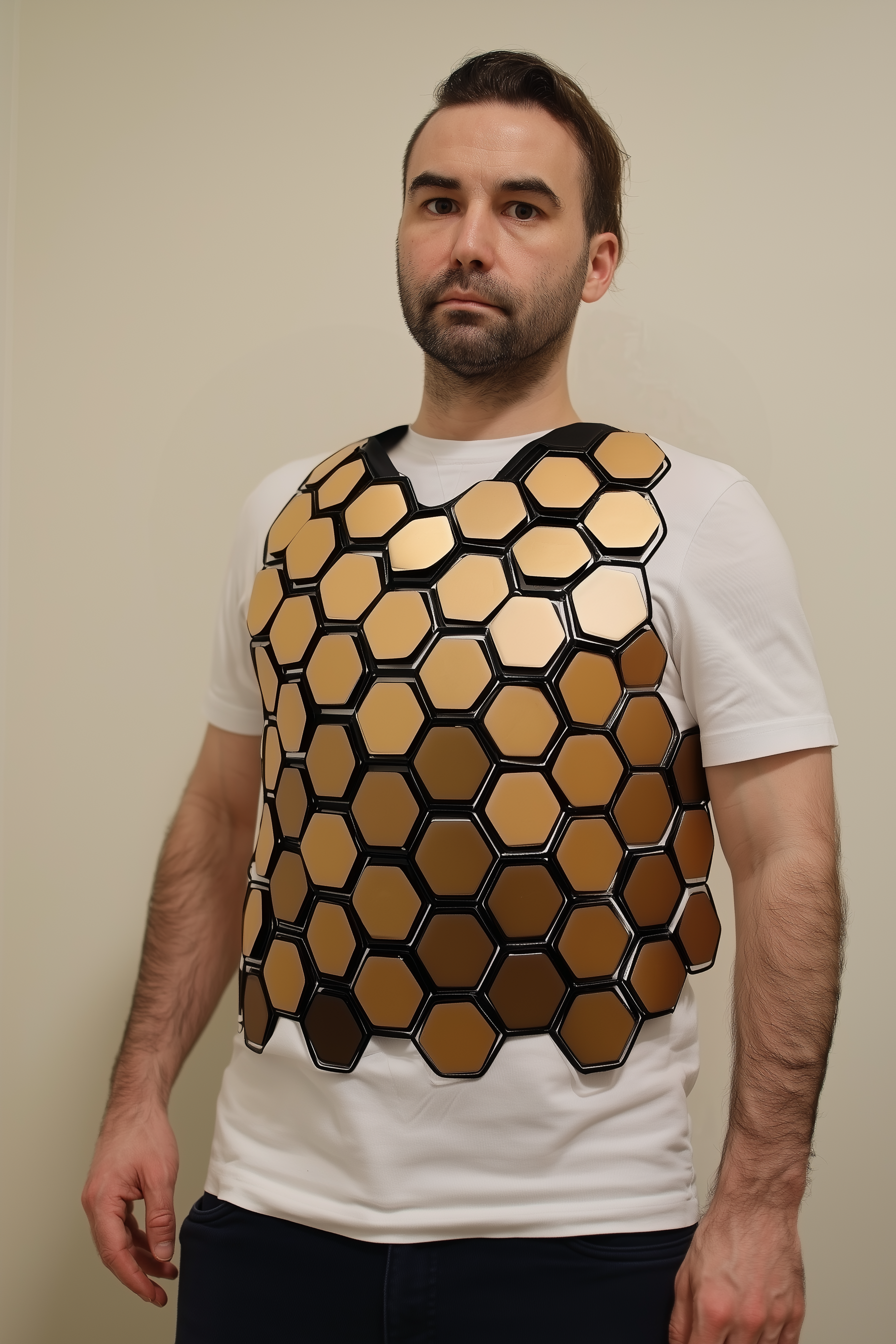
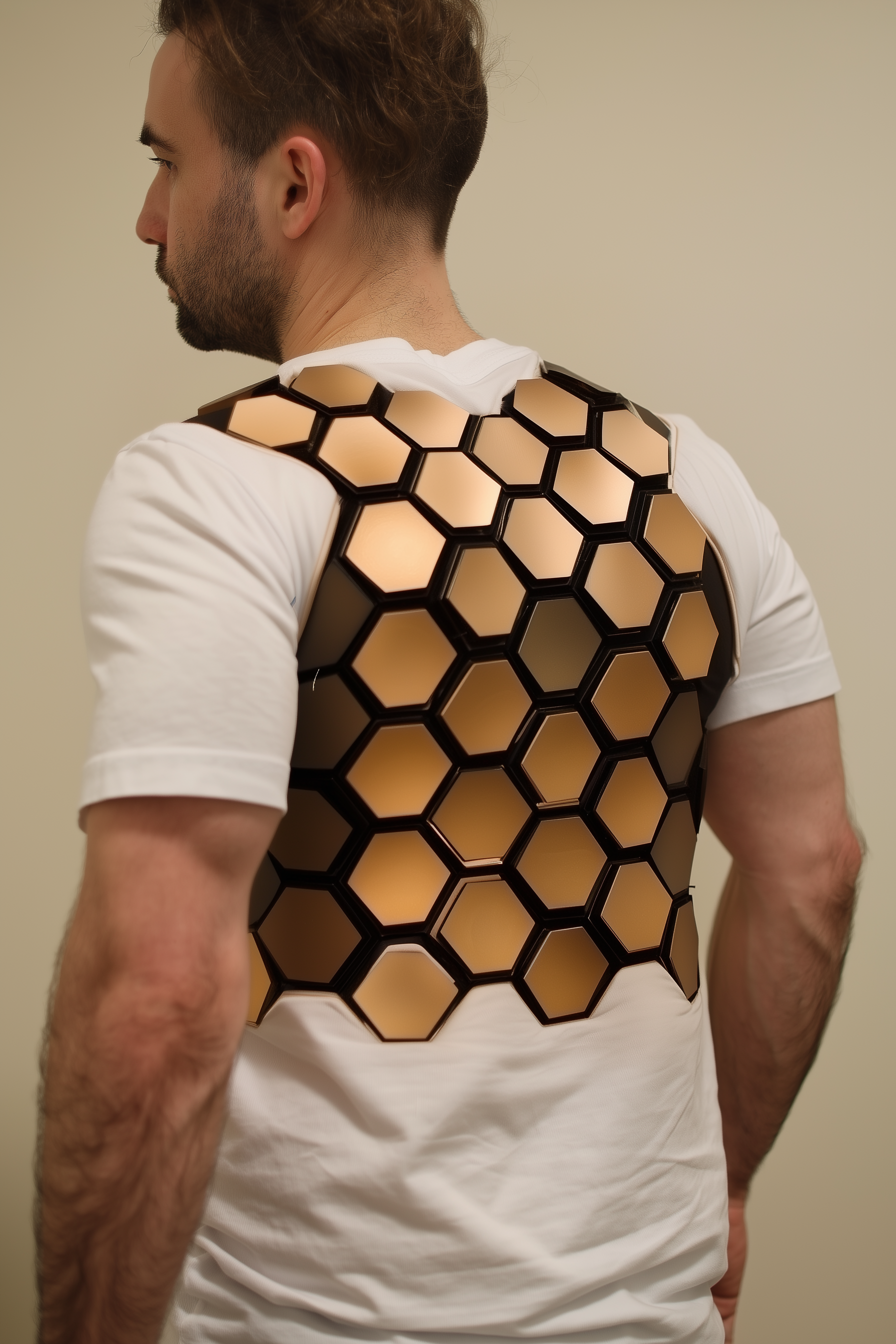
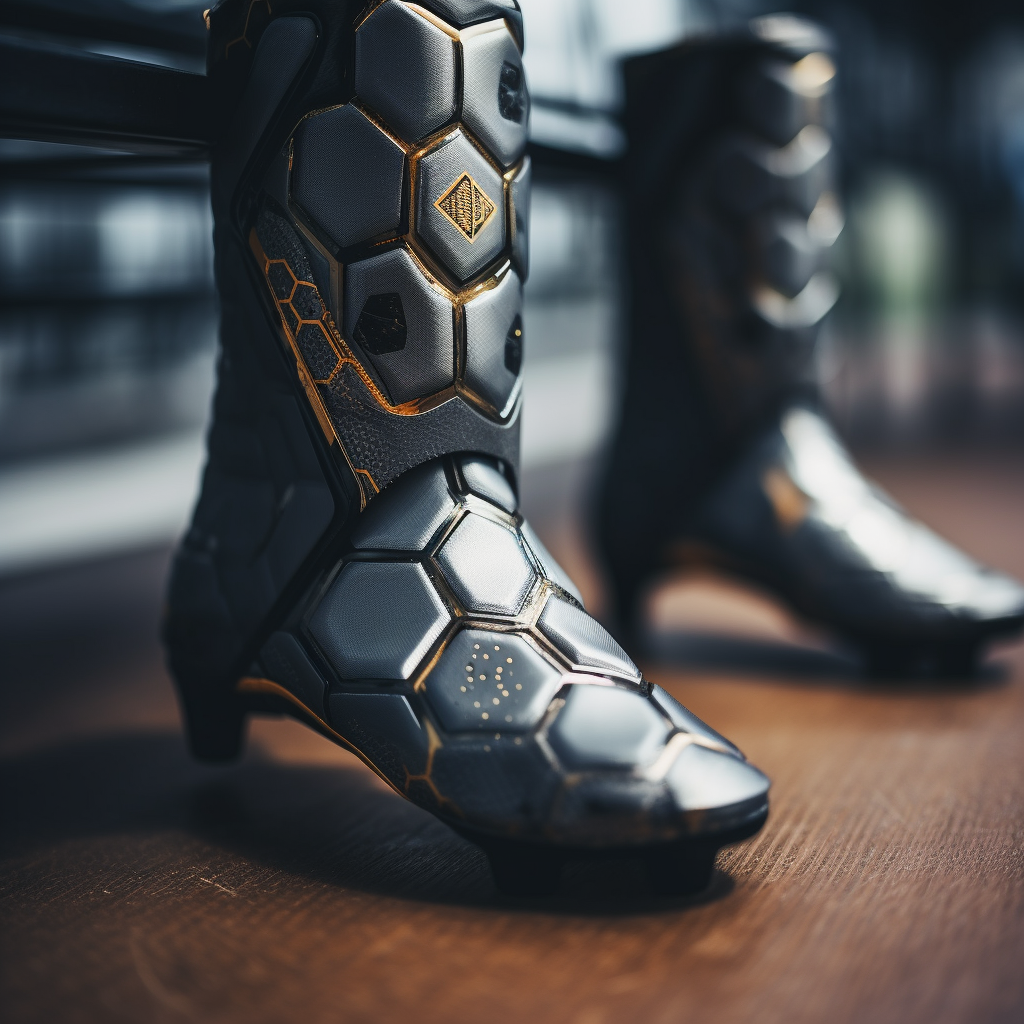
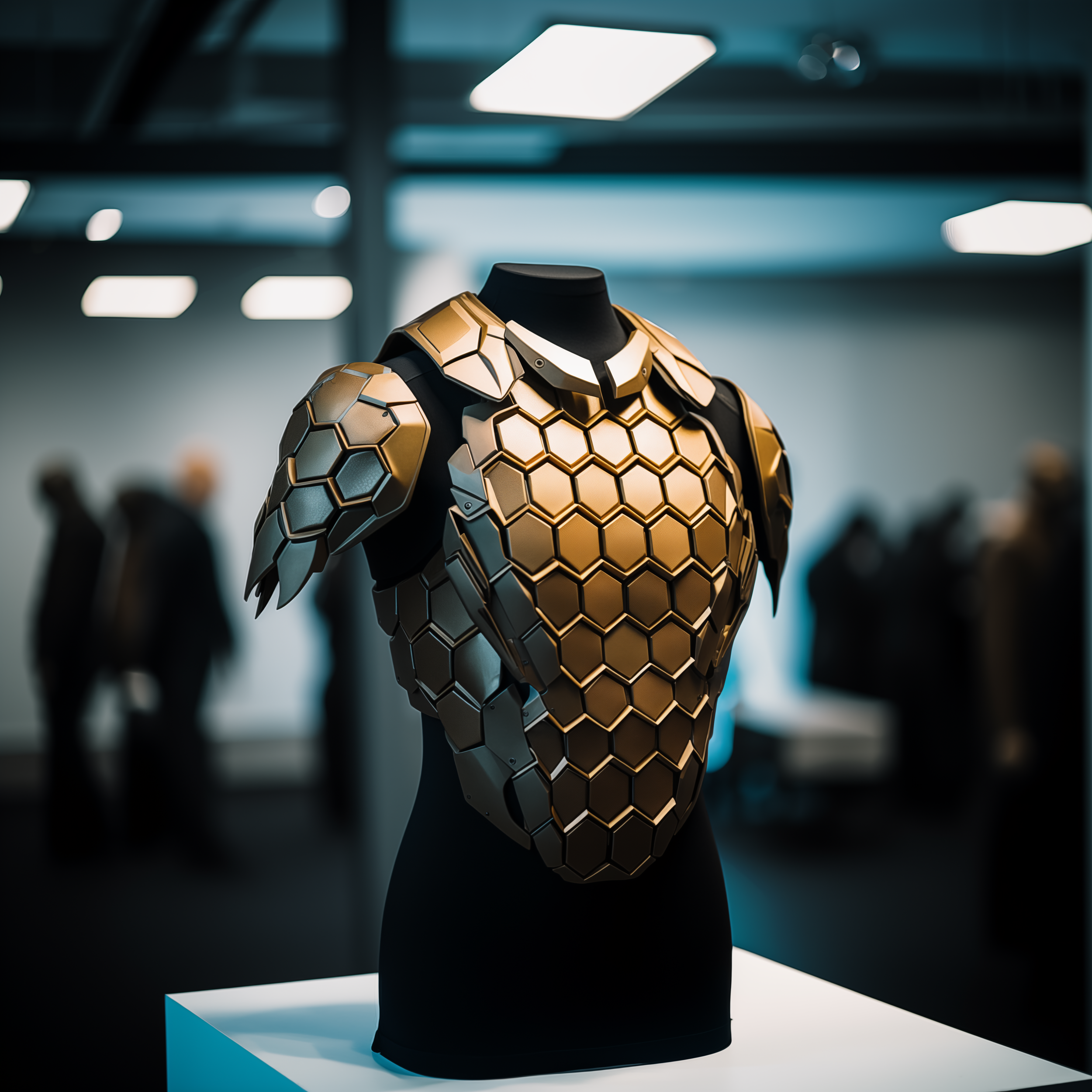
Due to time constraints and issues with lifting the silicone negative from the wood cut-out causing parts of the silicone to tear, a 1:1 model was not able to be completed. As a way to show the final product, I used Midjourney generative AI to create an image of a potential final outcome being worn by myself.
Using generative AI we can imagine a broad range of possible applications for this material. With these new applications, widespread adoption will happen sooner. This tech can be adapted for use in steel-toe shoes, shin pads, helmets, and more!